
CT-SCAN EXAM
Routine Brain CT (With or Without Contrast Medium)
Head Trauma + Bone Window
Mandible (Mask, TMJ, Paranasal Sinuses)
Neck (Soft Tissue)
Cervical Spine
Routine Chest (thorax)
High Resolution CT Chest
Thoracic Spine
Lumbosacral Spine
Lumbar Spine
Thoracic-Lumbar Spine
Pelvis
Abdomen & Abdomino-Pelvic
Upper & Lower Extremities
CT Angiography
CT Cholangiography
CT Endoscopy
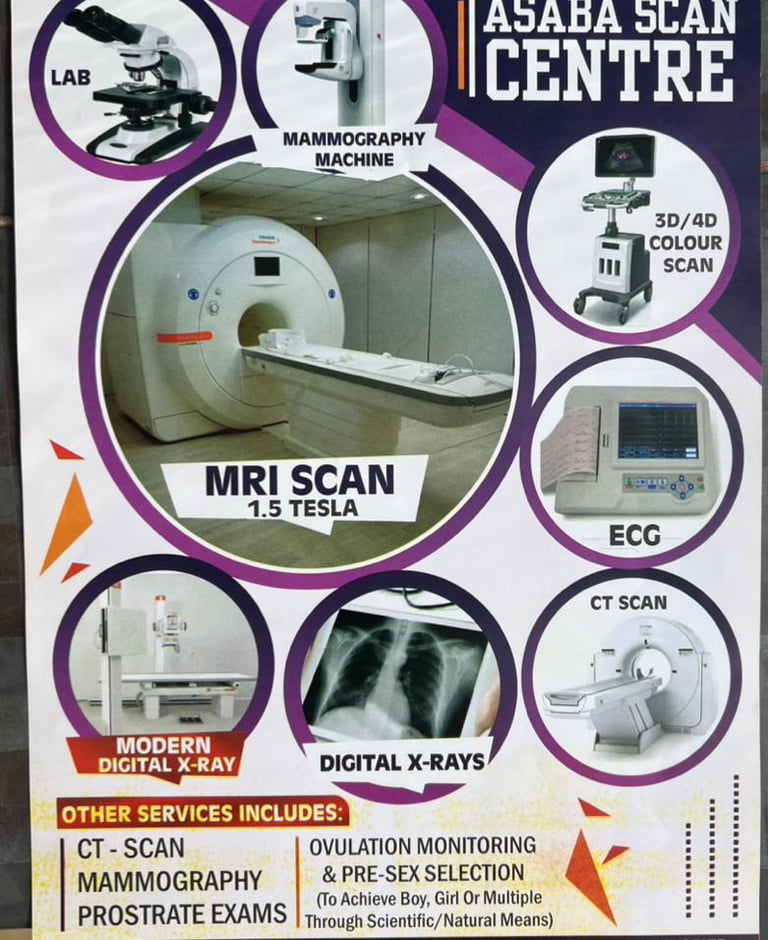
1. Routine Brain CT (With or Without Contrast Medium)
What It Entails: A CT scan of the brain to assess for conditions like stroke, bleeding, tumors, or brain injuries. Contrast medium may be used to improve image clarity and highlight certain brain structures.
2. Head Trauma + Bone Window
What It Entails: A CT scan focusing on the head after trauma, using a "bone window" setting to highlight bone fractures or injuries. It helps detect skull fractures or damage to the brain after an accident or injury.
3. Mandible (Mask, TMJ, Paranasal Sinuses)
What It Entails: A CT scan of the mandible (jaw), temporomandibular joints (TMJ), and paranasal sinuses. It helps detect fractures, infections, or conditions affecting the jaw, sinuses, and surrounding structures.
4. Neck (Soft Tissue)
What It Entails: A CT scan of the neck focusing on soft tissues, such as muscles, glands, and blood vessels. It is used to evaluate for tumors, infections, or inflammation in the neck area.
5. Cervical Spine
What It Entails: A CT scan of the cervical spine (neck region) to evaluate for fractures, arthritis, or disc problems. It helps in diagnosing conditions affecting the bones and soft tissues in the neck.
6. Routine Chest (Thorax)
What It Entails: A CT scan of the chest to assess the lungs, heart, and surrounding structures. It helps diagnose lung diseases, heart conditions, infections, or tumors in the chest area.
7. High Resolution CT Chest
What It Entails: A more detailed CT scan of the chest with higher resolution to evaluate lung tissue. It is often used for diagnosing conditions like emphysema, fibrosis, or lung cancer.
8. Thoracic Spine
What It Entails: A CT scan of the thoracic spine (upper and middle back) to assess for fractures, degenerative conditions, or tumors in the vertebrae and surrounding tissues.
9. Lumbosacral Spine
What It Entails: A CT scan of the lower spine (lumbar and sacral areas) to assess for disc problems, fractures, or spinal cord issues. It's often used in cases of lower back pain or injury.
10. Lumbar Spine
What It Entails: A CT scan specifically of the lumbar spine (lower back) to evaluate for issues like herniated discs, fractures, or other conditions that cause back pain.
11. Thoracic-Lumbar Spine
What It Entails: A CT scan that covers both the thoracic and lumbar regions of the spine to assess for fractures, disc problems, or other spinal conditions that may affect the upper to lower back.
12. Pelvis
What It Entails: A CT scan of the pelvis to assess for fractures, tumors, or conditions affecting the pelvic bones, organs (such as the bladder, ovaries, and prostate), or blood vessels.
13. Abdomen & Abdomino-Pelvic
What It Entails: A CT scan of both the abdomen and pelvic regions to evaluate internal organs like the liver, kidneys, intestines, and reproductive organs. It helps detect conditions like infections, cancers, or organ abnormalities.
14. Upper & Lower Extremities
What It Entails: A CT scan of the arms, legs, and joints to assess for fractures, tumors, infections, or other abnormalities in the bones and soft tissues of the extremities.
15. CT Angiography
What It Entails: A CT scan used to visualize blood vessels and arteries, often with contrast dye, to check for blockages, aneurysms, or abnormalities in the blood flow, particularly in the heart, brain, or lungs.
16. CT Cholangiography
What It Entails: A CT scan used to visualize the bile ducts in the liver and gallbladder. It helps diagnose conditions like bile duct obstructions, stones, or other diseases affecting the biliary system.
17. CT Endoscopy
What It Entails: A specialized CT scan used to examine internal organs using a "virtual" endoscopy technique. It provides a non-invasive alternative to traditional endoscopy and is useful for viewing areas that are hard to reach with regular scopes, such as the lungs or digestive tract.
Each of these tests uses computed tomography (CT) to provide detailed images for diagnosing a variety of health conditions, helping doctors assess and treat patients accurately.
Here’s a brief explanation of what each of these CT scan exams entails:
Get in touch
Address
85 Dennis Osadebe Way, Near RTC Motor Park, Akwuebulu Junction, Asaba, Delta State
Contacts
+234 8036778988
info@asabascan.com